
Introduction
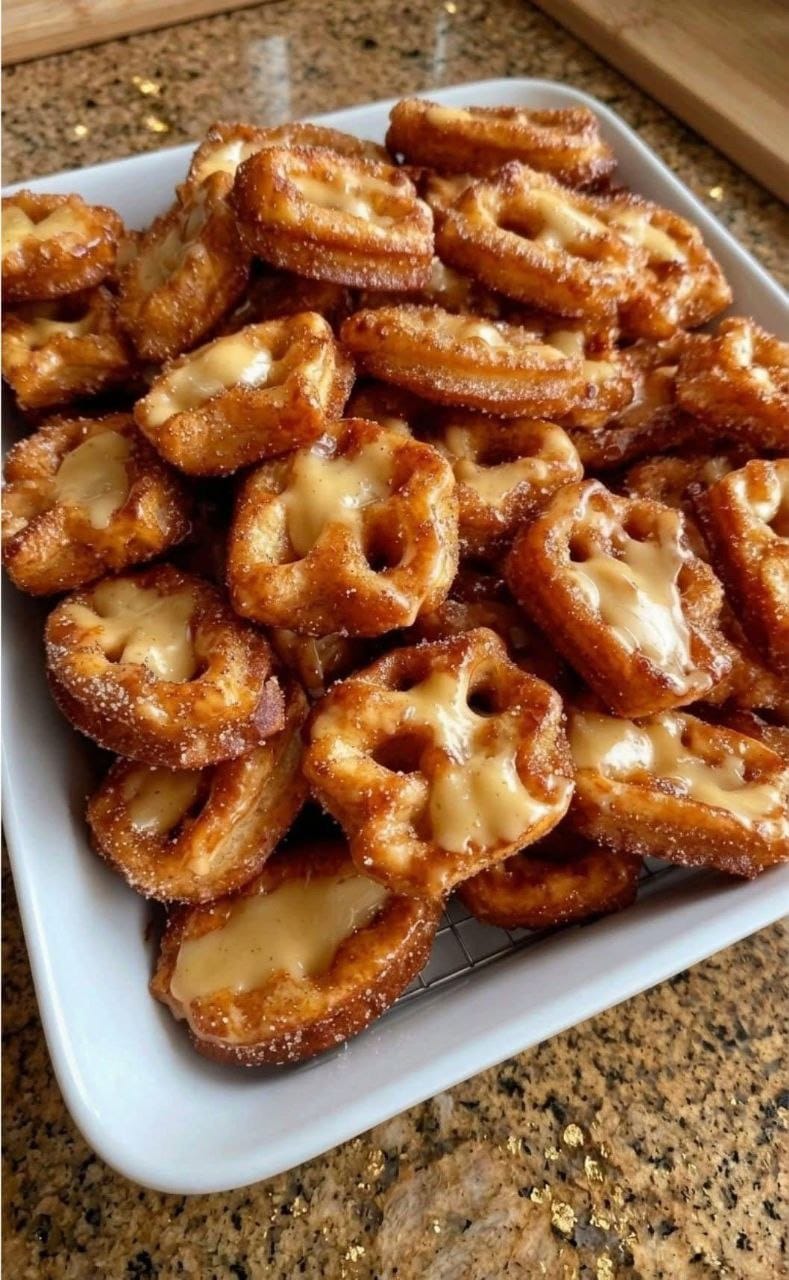
Imagine this: a warm, golden-brown bite, impossibly crispy on the outside, giving way to a tender, airy interior. It’s dusted generously with sparkling cinnamon sugar, and nestled in its heart is a luscious, creamy filling that melts on your tongue. This, my friends, is the irresistible charm of Homemade Churro Bites – a delightful twist on a classic sweet treat that’s about to become your new obsession.
Churros, those beloved Spanish and Latin American fried dough pastries, are famous for their ridged, elongated shape and their perfect pairing with rich chocolate dipping sauce. But today, we’re taking that beloved concept and transforming it into something even more fun and utterly addictive: bite-sized churro rings with a glorious, gooey center. These little nuggets of joy are perfect for sharing (or not!), easy to pop into your mouth, and offer a truly gourmet experience without any of the fuss. Forget the long lines at the fair or the complicated deep-frying setups; we’re bringing the magic of fresh, warm churros right into your kitchen.
Why make these at home? Beyond the sheer joy of creating something so delicious from scratch, homemade churro bites offer unparalleled freshness and the ability to customize them exactly to your liking. You control the quality of ingredients, the crispiness of the bite, and the richness of that signature filling. While they look impressive, requiring a few simple techniques, they are surprisingly easy to master. Get ready to impress your family and friends with these golden, cinnamon-spiced treasures, each one a perfect little package of sweet, crunchy, and creamy bliss!
Nutritional Information
Per serving (approximate values):
Calories: 320
Protein: 4g
Carbohydrates: 45g
Fat: 15g
Fiber: 1g
Sodium: 180mg
Ingredients
For the Churro Dough:
1 cup water
1/2 cup unsalted butter (1 stick)
1/4 teaspoon salt
1 cup all-purpose flour
2 large eggs
1 teaspoon vanilla extract (optional, but recommended)
For Frying:
6-8 cups vegetable oil (or other neutral oil like canola or sunflower), for deep frying
For the Cinnamon Sugar Coating:
1/2 cup granulated sugar
1 tablespoon ground cinnamon
For the Dulce de Leche Glaze/Filling:
1/2 cup dulce de leche (store-bought or homemade)
2 tablespoons heavy cream (or milk)
1/4 teaspoon sea salt (optional, to balance sweetness)
Instructions
Prepare the Churro Dough: In a medium saucepan, combine the water, butter, and salt. Bring the mixture to a rolling boil over medium-high heat, stirring occasionally to melt the butter.
Once boiling, immediately remove the saucepan from the heat. Add all of the flour at once and stir vigorously with a wooden spoon or spatula until a smooth ball of dough forms and pulls away from the sides of the pan. This step is crucial for developing the choux pastry structure.
Return the saucepan to low heat and continue to cook the dough for 1-2 minutes, stirring constantly. This helps to dry out the dough, which is essential for crispy churros. You’ll notice a thin film forming on the bottom of the pan.
Transfer the dough to a large mixing bowl. Let it cool for 5-10 minutes, stirring occasionally, until it’s warm to the touch but not hot. This prevents the eggs from scrambling.
Add the eggs one at a time, beating well with an electric mixer (or by hand, though it will take more effort) after each addition until fully incorporated and the dough is smooth and glossy. If using, mix in the vanilla extract with the last egg. The dough will look lumpy and separated at first, but keep mixing; it will come together into a thick, pipeable consistency.
Transfer the prepared churro dough to a piping bag fitted with a large open star tip (or a large round tip if you prefer smoother churros). If you don’t have a piping tip, you can snip off about 1/2 inch from the corner of a sturdy Ziploc bag.
Fry the Bites to Golden Perfection: Pour the vegetable oil into a large, heavy-bottomed pot or Dutch oven, ensuring it’s at least 3-4 inches deep. Heat the oil over medium-high heat until it reaches 350°F (175°C). Use a candy thermometer or deep-fry thermometer to monitor the temperature accurately.
Once the oil is at the correct temperature, carefully pipe 1-inch to 1.5-inch sections of dough directly into the hot oil, using a pair of kitchen shears or a knife to snip off each piece. Aim for ring or pretzel-like shapes with a central indentation, if possible, by piping a small circle or a double-loop. Do not overcrowd the pot; fry in batches to maintain oil temperature and ensure even cooking.
Fry the churro bites for 2-4 minutes per batch, turning occasionally with a slotted spoon or spider, until they are golden brown and crispy all over.
Using a slotted spoon or spider, carefully remove the cooked churro bites from the oil and transfer them to a wire rack set over a baking sheet lined with paper towels. This allows excess oil to drain.
Coat with Cinnamon Sugar: While the churro bites are still warm, prepare the cinnamon sugar coating. In a shallow bowl, combine the granulated sugar and ground cinnamon, mixing well.
Add the warm churro bites to the cinnamon sugar mixture, a few at a time, and toss gently to coat them completely and evenly. Place the coated churro bites back on the wire rack.
Prepare the Signature Dulce de Leche Glaze/Filling: In a small microwave-safe bowl, combine the dulce de leche, heavy cream, and optional sea salt. Microwave on high for 15-30 seconds, stirring until smooth and warm enough to be easily drizzled or piped. If it’s too thick, add a tiny bit more cream; if too thin, a tiny bit more dulce de leche.
Transfer the warm dulce de leche glaze to a small piping bag (or a Ziploc bag with a tiny corner snipped off) for precise application.
Carefully pipe a dollop of the dulce de leche glaze into the central indentation of each churro bite. Alternatively, you can simply drizzle the glaze generously over all the churro bites.
Serve immediately and enjoy your homemade churro bites while they are still warm and fresh!
Cooking Tips and Variations
Dough Consistency is Key: The churro dough, also known as choux pastry, should be thick enough to hold its shape when piped but not so stiff that it’s hard to squeeze. If your dough is too wet, your churros might be soggy; if too dry, they could be tough. Ensure you cook the flour and liquid mixture long enough to dry it out, and then incorporate the eggs fully, one at a time, until the dough is smooth and glossy. A good test is to see if the dough forms a “V” shape when lifted with a spoon.
Oil Temperature Control: This is perhaps the most critical factor for perfect churros. If the oil is too cool, the churros will absorb too much oil and be greasy. If it’s too hot, they’ll brown too quickly on the outside and remain raw on the inside. Invest in a reliable deep-fry thermometer and keep the oil as close to 350°F (175°C) as possible. Adjust the heat as needed between batches.
Don’t Overcrowd the Fryer: Frying too many churro bites at once will drop the oil temperature significantly, leading to greasy churros. Fry in small batches, giving each churro plenty of space to cook evenly and turn golden brown.
Piping Technique for Perfect Bites: For these specific churro bites with a filled center, a large open star tip or even a large round tip can work. When piping, aim to create a small ring or a double-loop shape, which naturally creates that central indentation perfect for holding the glaze. Use kitchen shears to snip the dough cleanly as you pipe it into the hot oil.
Other Coating Ideas: While cinnamon sugar is classic, don’t stop there! Try a simple powdered sugar dusting, a blend of sugar and cocoa powder for a chocolatey twist, or even a mix of sugar and a pinch of cardamom or nutmeg for a different spice profile.
Dipping Sauce Variations: If you prefer to serve your churro bites with a dipping sauce instead of an internal filling, the possibilities are endless. A classic rich chocolate sauce (melted chocolate with a splash of cream), more dulce de leche on the side, or even a berry compote would be delicious. For a truly decadent treat, a caramel dipping sauce made from scratch is divine.
Savory Churro Bites? While these are decidedly sweet, the base churro dough can be adapted for savory applications! Imagine piping plain churro dough, frying it, and then tossing it with Parmesan cheese and herbs, or even a spicy chili-lime seasoning. Serve with a savory dipping sauce like a roasted red pepper aioli or a cheesy dip for an unexpected appetizer.
Storage and Reheating
Storage: Churro bites are always best enjoyed fresh and warm. However, if you have leftovers, store them in an airtight container at room temperature for up to 1-2 days. Be aware that they will lose some of their crispness over time, especially if they have been glazed or filled.
Reheating: To bring some of their crispness back, you can reheat leftover churro bites. Place them on a baking sheet and warm them in a preheated oven at 350°F (175°C) for 5-7 minutes, or in an air fryer at 350°F (175°C) for 2-4 minutes, until heated through and slightly crispy again. Avoid microwaving, as this will make them soft and chewy rather than crispy. If they were filled with glaze, the glaze will melt upon reheating, which is perfectly fine!
Making Ahead: While the dough can be made a few hours in advance and kept refrigerated in the piping bag, it’s generally best to fry churros right before serving for optimal texture. You can prepare the cinnamon sugar and the dulce de leche glaze in advance and store them separately. This way, when it’s time to serve, you just need to fry, coat, and fill!
Frequently Asked Questions
Can I bake these churro bites instead of frying them?
While you can bake churros, the texture will be significantly different. Baked churros tend to be softer and more cake-like, lacking the distinct crispy exterior that deep-frying provides. For the authentic churro experience, frying is recommended. If baking, preheat your oven to 400°F (200°C), pipe the churros onto a parchment-lined baking sheet, and bake for 15-20 minutes, or until golden brown. You might also brush them with melted butter before baking for a richer flavor.
My churro dough is too runny/thick. What went wrong?
If your dough is too runny, it likely means you didn’t cook the flour mixture long enough to dry it out, or you added too much egg. To fix a slightly runny dough, you can try adding a tablespoon or two of flour and mixing again, but be careful not to overmix. If your dough is too thick, it might be due to not enough liquid initially, or cooking it too long. Ensure your measurements are precise and that you’re adding the eggs gradually until the dough reaches a pipeable, glossy consistency.
How do I prevent my churros from being greasy?
Greasy churros are almost always a result of oil that isn’t hot enough. When the oil temperature drops, the churros absorb more oil rather than cooking quickly and forming a crisp crust. Always use a thermometer to maintain the oil temperature at 350°F (175°C). Additionally, don’t overcrowd the pot, as this will lower the oil temperature. Fry in small batches and allow the oil to come back up to temperature between batches.
Can I make a different filling or glaze?
Absolutely! The dulce de leche glaze is just one delicious option. You could use a simple powdered sugar glaze (powdered sugar mixed with a little milk or water and vanilla), a chocolate ganache (melted chocolate with heavy cream), or even a cream cheese glaze. For a fruitier touch, a lemon curd or a raspberry jam could be piped into the centers for a delightful contrast.