
Introduction
Imagine this: you wake up on a crisp Sunday morning, the scent of coffee brewing in the air. You pop a few simple ingredients into a pot, set it to work, and head out the door for church, errands, or a leisurely walk. Hours later, you return home to a symphony of savory aromas, a warm embrace that promises comfort and satisfaction. That, my friends, is the magic of this “Set Before Church: Fork-Tender Pot Roast.” This isn’t just a meal; it’s a culinary experience designed for busy lives, delivering maximum flavor with minimal effort. It’s the kind of dish that makes you feel like a gourmet chef, even on your most hectic days, all thanks to the humble yet mighty slow cooker.
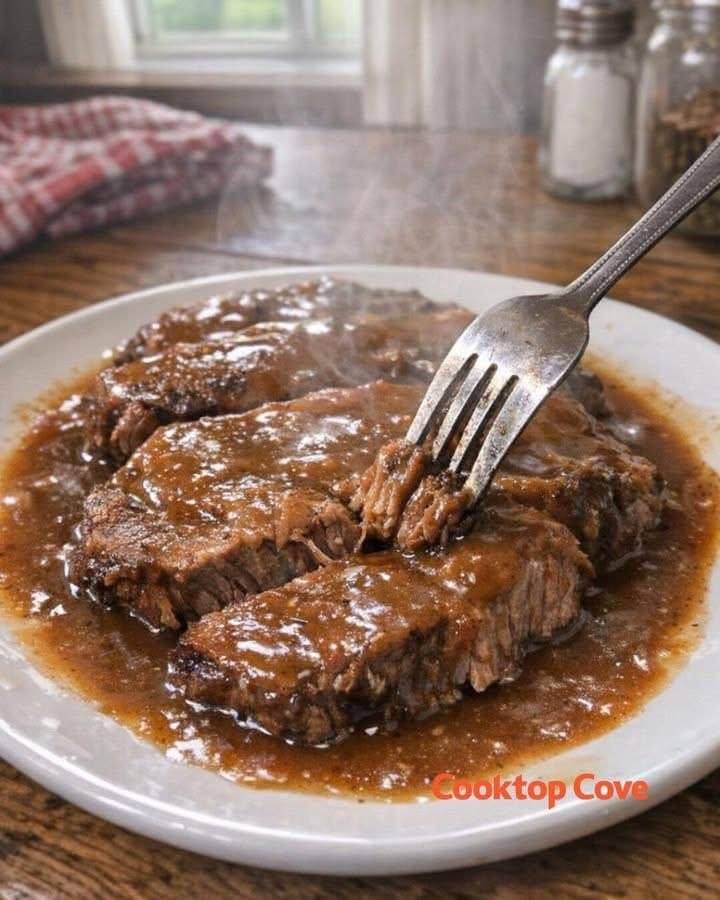
Pot roast is a timeless classic, a beloved staple in countless households, and for good reason. It’s the quintessential comfort food, conjuring images of family dinners, cozy evenings, and hearty satisfaction. What sets this particular recipe apart is its foolproof ability to transform a humble cut of beef into something so unbelievably tender that your fork glides through it with no resistance whatsoever. The meat practically melts in your mouth, infused with a rich, deep flavor from hours of slow cooking. Paired with a luscious, thick gravy that begs to be spooned over everything on your plate, this pot roast isn’t just a meal; it’s a revelation.
The beauty of this recipe lies in its simplicity and the incredible reward it offers. There’s no complicated technique, no endless stirring, just a bit of initial prep, and then the slow cooker does all the heavy lifting. You’ll come home to a house filled with the intoxicating aroma of slow-cooked beef, ready to be devoured. This isn’t just about feeding your family; it’s about nourishing them with love and flavor, all while reclaiming your precious time. Get ready to add a new favorite to your recipe rotation – one that delivers on its promise of effortless deliciousness every single time.
Nutritional Information
Per serving (approximate values):
Calories: 480
Protein: 45g
Carbohydrates: 15g
Fat: 25g
Fiber: 3g
Sodium: 650mg
Ingredients
3-4 pounds boneless beef chuck roast (or bottom round roast)
2 tablespoons olive oil
1 large yellow onion, roughly chopped
3 cloves garlic, minced
1 cup beef broth (low sodium preferred)
1/2 cup dry red wine (optional, but highly recommended for depth of flavor)
1 tablespoon Worcestershire sauce
1 tablespoon tomato paste
1 teaspoon dried thyme
1 teaspoon dried rosemary
1 teaspoon salt
1/2 teaspoon black pepper
1 pound baby carrots, whole
1 1/2 pounds small red potatoes, quartered (or cut into 1-2 inch pieces)
2 tablespoons cornstarch (for gravy, optional)
2 tablespoons cold water (for gravy, optional)
Fresh parsley, chopped (for garnish, optional)
Instructions
Pat the beef roast thoroughly dry with paper towels. This is crucial for achieving a good sear. Season generously all over with salt and black pepper.
Heat the olive oil in a large, heavy-bottomed skillet or Dutch oven over medium-high heat until shimmering.
Carefully place the seasoned beef roast in the hot skillet and sear for 3-4 minutes per side, until a deep golden-brown crust forms. This step is essential for developing rich flavor. Remove the seared roast from the skillet and set aside.
Reduce the heat to medium. Add the chopped onion to the same skillet and cook, stirring occasionally, until softened and lightly browned, about 5-7 minutes.
Add the minced garlic to the skillet and cook for another minute until fragrant, being careful not to burn it.
Pour in the beef broth and red wine (if using), scraping up any browned bits from the bottom of the skillet with a wooden spoon. This deglazing step adds immense flavor to your gravy.
Stir in the Worcestershire sauce, tomato paste, dried thyme, and dried rosemary. Bring the mixture to a simmer.
Carefully transfer the seared beef roast to your slow cooker insert.
Arrange the baby carrots and quartered potatoes around the roast in the slow cooker.
Pour the hot broth mixture from the skillet over the beef and vegetables in the slow cooker.
Cover the slow cooker and cook on low for 7-9 hours, or on high for 4-5 hours, until the beef is incredibly tender and easily shredded with a fork. The cooking time will vary slightly depending on your slow cooker and the size/cut of your roast.
Once cooked, carefully remove the roast from the slow cooker and transfer it to a cutting board. Tent it loosely with foil and let it rest for 10-15 minutes before slicing or shredding. This allows the juices to redistribute, ensuring a more tender and flavorful result.
While the meat rests, prepare the gravy (optional, but highly recommended). Skim off any excess fat from the liquid in the slow cooker. In a small bowl, whisk together the cornstarch and cold water until smooth to create a slurry.
Pour the cornstarch slurry into the slow cooker liquid, whisking constantly. Turn the slow cooker to high heat or transfer the liquid to a saucepan and bring to a simmer on the stovetop, stirring until the gravy thickens to your desired consistency. Taste and adjust seasonings if needed.
Slice or shred the rested pot roast against the grain. Serve immediately with the tender carrots and potatoes, drizzled generously with the rich, savory gravy. Garnish with fresh chopped parsley if desired.
Cooking Tips and Variations
For the absolute best results, do not skip searing the meat. This crucial step creates a beautiful crust and develops a depth of flavor that simply cannot be achieved by simply adding raw meat to the slow cooker. Use a heavy-bottomed pan and get it nice and hot before adding the beef. Another key is to allow the roast to come closer to room temperature for about 30 minutes before searing; this helps achieve a more even sear. When it comes to ingredients, using a good quality beef broth makes a noticeable difference in the final taste of your gravy. Low-sodium broth gives you more control over the salt content.
If you prefer a richer, slightly smoky flavor, a teaspoon of smoked paprika or a dash of liquid smoke can be added to the broth mixture. For an even more complete meal, consider adding other root vegetables like parsnips or turnips alongside the carrots and potatoes. Bell peppers, especially red or yellow, can also be added during the last hour of cooking for a touch of sweetness and color. If you don’t have red wine, you can substitute it with an equal amount of beef broth, or even a dark beer for a different flavor profile. For a brighter finish, a squeeze of fresh lemon juice or a tablespoon of apple cider vinegar at the very end of cooking can really lift the flavors.
This recipe is incredibly versatile. If you’re short on time, an Instant Pot can significantly reduce the cooking duration. For an Instant Pot, sear the meat and sauté the aromatics directly in the pot on the “Sauté” function. Add the liquids and seasonings, then cook on high pressure for 60-75 minutes for a 3-4 pound roast, followed by a natural pressure release for 15 minutes before quick releasing any remaining pressure. For oven braising, follow the searing and assembly steps, then transfer everything to a Dutch oven with a tight-fitting lid and bake at 300°F (150°C) for 3-4 hours, or until fork-tender.
Storage and Reheating
Leftover pot roast is a true treasure! To store, allow the pot roast, vegetables, and gravy to cool completely before transferring them to airtight containers. Store them separately if possible, or together in a single container. Properly stored, pot roast will keep in the refrigerator for 3-4 days. For longer storage, it freezes beautifully. Place cooled pot roast and gravy in freezer-safe bags or containers for up to 3 months. Thaw frozen pot roast overnight in the refrigerator before reheating.
To reheat, the best method is gently on the stovetop or in the oven. For stovetop reheating, place the pot roast and gravy in a saucepan over medium-low heat, stirring occasionally, until heated through. You might need to add a splash of beef broth or water to thin the gravy if it’s too thick. In the oven, place the pot roast, vegetables, and gravy in an oven-safe dish, cover with foil, and bake at 300°F (150°C) for 20-30 minutes, or until warmed through. You can also reheat individual portions in the microwave, using short intervals and stirring frequently, until hot. Be careful not to overheat, as this can dry out the meat. Leftover pot roast is fantastic shredded for sandwiches, tacos, or even mixed into pasta dishes!
Frequently Asked Questions
What cut of beef is best for pot roast?
The best cuts of beef for pot roast are those with good marbling and connective tissue, which break down beautifully during slow cooking to create incredibly tender meat. Chuck roast (also known as chuck eye roast, shoulder steak, or pot roast) is the most popular and highly recommended choice. Other excellent options include bottom round roast, brisket, or even a tougher cut like a cross-rib roast. Avoid lean cuts like sirloin or tenderloin, as they will dry out and become tough with long cooking times.
Can I add potatoes and carrots at the beginning of cooking?
Yes, you absolutely can add potatoes and carrots at the beginning of the slow cooking process. For this recipe, they are added along with the beef. Root vegetables like these hold up well to long cooking times and absorb the rich flavors of the gravy. If you prefer your vegetables to be slightly firmer or want to add more delicate vegetables like peas or green beans, you can add them during the last 1-2 hours of cooking.
How do I make the gravy thicker or thinner?
To make the gravy thicker, you can create a cornstarch slurry by whisking 1 tablespoon of cornstarch with 1 tablespoon of cold water until smooth. Stir this into the simmering gravy in the slow cooker or saucepan and continue to cook, stirring, until it reaches your desired consistency. Repeat if necessary, adding more slurry a little at a time. To make the gravy thinner, simply whisk in a splash more beef broth or water until it reaches your preferred consistency. Remember to taste and adjust seasonings after any additions.