
Introduction
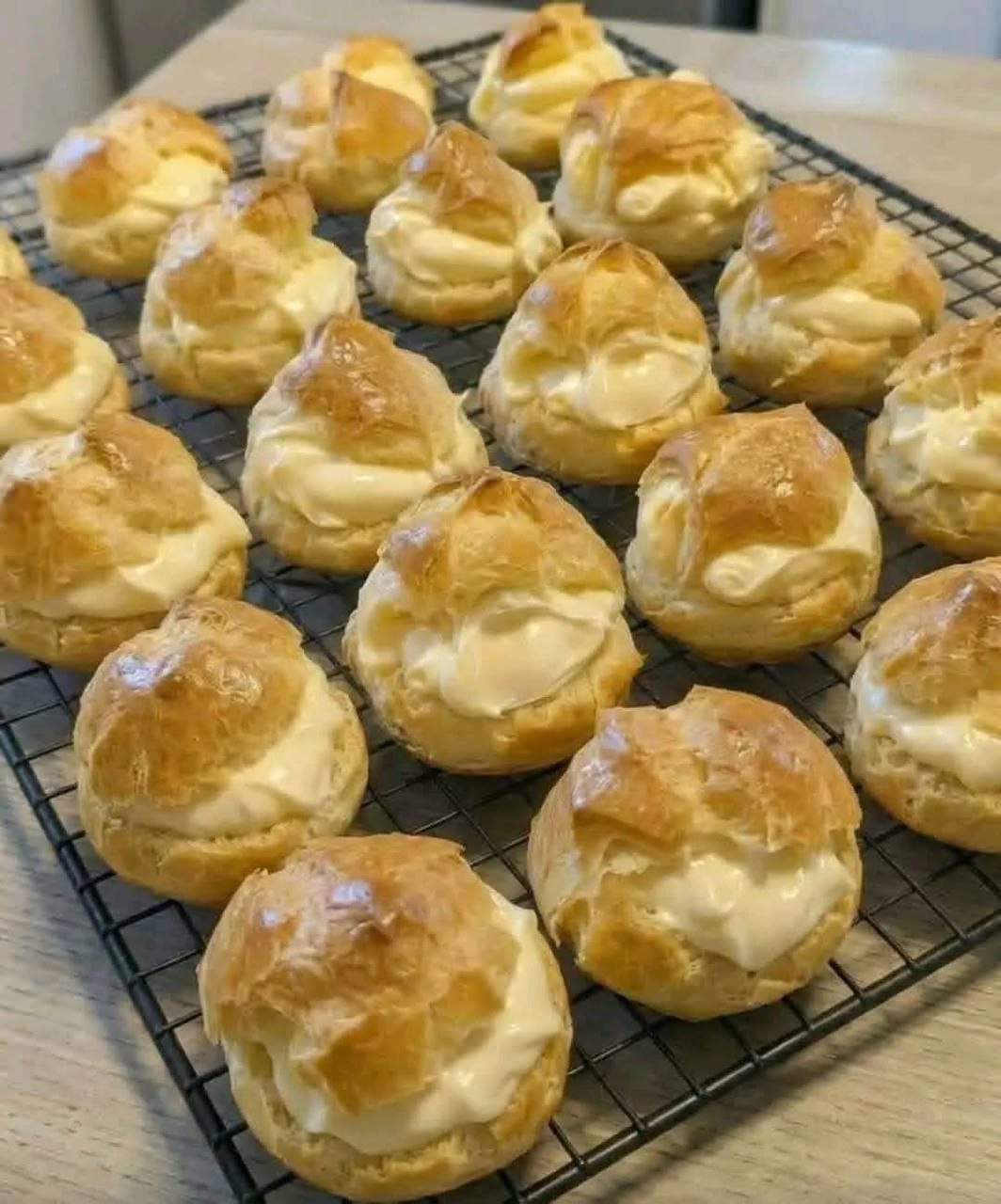
There’s something undeniably magical about a perfectly crafted cream puff. These delicate, airy pastries, known in France as profiteroles or choux à la crème, are a true testament to the art of baking. Imagine a golden-brown, crisp shell, so light it practically melts in your mouth, giving way to a luscious, velvety custard filling that bursts with sweet, creamy flavor. It’s a symphony of textures and tastes that has captivated dessert lovers for centuries, making it a beloved treat across the globe.
But what makes cream puffs so special? It all starts with choux pastry, a unique dough that’s cooked on the stovetop before baking. This ingenious method creates steam within the dough, causing it to puff up dramatically in the oven and leaving behind a hollow interior – the perfect cavity for a generous dollop of rich custard. While they might look impressive and perhaps a little intimidating, making cream puffs at home is a wonderfully rewarding experience. Not only do you get to enjoy them fresh from the oven, but you also have the freedom to customize the fillings and toppings to your heart’s content, creating a dessert that truly wows.
This recipe will guide you through every step of creating these irresistible treats, from mastering the light-as-air choux pastry to whipping up a smooth, classic vanilla custard. We’ll demystify the process, share insider tips for success, and help you achieve those coveted golden shells and creamy centers. Get ready to impress your friends and family (or simply treat yourself!) with a batch of homemade cream puffs that are far superior to anything you’d find in a bakery.
Nutritional Information
Per serving (approximate values):
Calories: 280
Protein: 6g
Carbohydrates: 28g
Fat: 17g
Fiber: 1g
Sodium: 120mg
Ingredients
For the Choux Pastry:
1 cup water
1/2 cup unsalted butter (1 stick), cut into pieces
1/4 teaspoon salt
1 cup all-purpose flour, sifted
4 large eggs, at room temperature
For the Vanilla Custard Filling:
2 cups whole milk
1/2 cup granulated sugar, divided
1/4 cup cornstarch
4 large egg yolks
2 tablespoons unsalted butter
1 teaspoon pure vanilla extract
Pinch of salt
For Garnish (Optional):
Powdered sugar, for dusting
Melted chocolate, for drizzling
Fresh berries
Instructions
Part 1: Making the Vanilla Custard Filling (Crème Pâtissière)
In a medium saucepan, combine the milk and half of the granulated sugar (1/4 cup). Heat over medium heat, stirring occasionally, until the sugar dissolves and the milk is hot but not boiling. Remove from heat just before it comes to a simmer.
In a separate medium bowl, whisk together the remaining 1/4 cup granulated sugar, cornstarch, egg yolks, and pinch of salt until smooth and pale yellow.
Gradually temper the hot milk mixture into the egg yolk mixture. To do this, slowly pour about half of the hot milk into the egg mixture while whisking constantly. This prevents the eggs from scrambling.
Pour the tempered egg mixture back into the saucepan with the remaining milk.
Return the saucepan to medium-low heat. Cook, whisking constantly, until the custard thickens significantly and comes to a gentle boil. Continue to boil gently for 1 minute, still whisking, to ensure the cornstarch is fully cooked and the custard is thick.
Remove the saucepan from the heat. Stir in the butter and vanilla extract until fully incorporated and smooth.
Pour the custard into a clean bowl. Press a piece of plastic wrap directly onto the surface of the custard to prevent a skin from forming.
Refrigerate the custard for at least 4 hours, or preferably overnight, until thoroughly chilled and firm.
Part 2: Making the Choux Pastry
Preheat your oven to 400°F (200°C). Line two baking sheets with parchment paper.
In a large, heavy-bottomed saucepan, combine the water, butter, and salt. Heat over medium-high heat, stirring occasionally, until the butter is melted and the mixture comes to a rolling boil.
Remove the saucepan from the heat. Immediately add the sifted flour all at once. Stir vigorously with a wooden spoon or heatproof spatula until the mixture forms a ball and pulls away from the sides of the pan.
Return the saucepan to medium heat and continue to cook the dough, stirring constantly, for 1-2 minutes. This step, known as drying the panada, helps to evaporate excess moisture and is crucial for proper puffing. You should see a thin film forming on the bottom of the pan.
Transfer the dough to a large mixing bowl (or the bowl of a stand mixer fitted with the paddle attachment). Let it cool for 5-10 minutes, stirring occasionally, to allow some of the steam to escape. It should be warm to the touch, not hot.
Add the eggs one at a time, beating well after each addition until fully incorporated and the dough is smooth before adding the next egg. The dough will look curdled and separated initially, but keep mixing, and it will come back together. The final dough should be smooth, shiny, and fall slowly from a spoon in a “V” shape.
Transfer the choux pastry to a piping bag fitted with a large round tip (or simply snip off the end of the bag for a plain opening).
Pipe 1.5 to 2-inch mounds of dough onto the prepared baking sheets, leaving about 2 inches between each puff as they will expand. You can also use two spoons to drop mounds of dough.
Lightly moisten your finger and gently press down any peaks on the piped dough to ensure even baking.
Bake in the preheated oven for 20 minutes.
After 20 minutes, reduce the oven temperature to 350°F (175°C) and continue to bake for another 15-20 minutes, or until the cream puffs are golden brown, firm, and feel light when lifted. Do not open the oven door during the first 20 minutes of baking, as this can cause the puffs to collapse.
Once baked, immediately remove the cream puffs from the oven. Using a small sharp knife, make a small slit in the side of each puff to allow steam to escape. This helps keep them crisp.
Transfer the baked choux pastry shells to a wire rack to cool completely.
Part 3: Assembling the Cream Puffs
Once the custard is thoroughly chilled and the choux pastry shells are completely cool, you can begin filling.
Whisk the chilled custard briefly to loosen it and ensure it’s smooth. Transfer the custard to a piping bag fitted with a round or star tip.
You have two main options for filling:
Method 1 (Piping from the bottom): Gently push the tip of the piping bag into the small slit you made earlier (or make a small hole in the bottom of each puff). Squeeze the piping bag until the puff feels heavy and full.
Method 2 (Cutting in half): Carefully slice each cream puff horizontally in half using a serrated knife. Pipe or spoon a generous amount of custard onto the bottom half, then place the top half back on.
Arrange the filled cream puffs on a serving platter.
Dust generously with powdered sugar, drizzle with melted chocolate, or serve with fresh berries, if desired.
Serve immediately for the best texture.
Cooking Tips and Variations
For the crispiest choux pastry, ensure your oven is fully preheated and avoid opening the oven door during the initial baking phase. The steam generated in the first part of baking is crucial for the puffs to rise. When adding the eggs to the choux pastry, be patient. The dough will look broken and slippery at first, but keep mixing, and it will eventually come together into a smooth, cohesive dough. The consistency should be thick enough to hold its shape but soft enough to pipe.
To prevent a skin from forming on your custard, always press plastic wrap directly onto its surface while it cools. This keeps it smooth and creamy. Make sure the custard is thoroughly chilled before filling the puffs; a warm or even slightly cool custard will make the pastry soggy. If your custard seems too thick after chilling, give it a good whisk or even beat it briefly with an electric mixer to restore its creamy texture.
For variations, consider flavoring your custard. You can infuse the milk with coffee beans, lemon zest, or even lavender for a unique twist. Chocolate custard is another delicious option – simply melt in some good quality dark chocolate at the end. For the choux pastry, a savory version can be made by omitting the sugar and filling with cheese, herbs, or a mushroom duxelles for elegant appetizers. You can also make smaller cream puffs (mini profiteroles) or larger éclairs using the same dough.
Storage and Reheating
Filled cream puffs are best enjoyed fresh, ideally within a few hours of assembly, as the pastry can start to soften over time. If you must store them, place them in an airtight container in the refrigerator for up to 1-2 days. The pastry will lose some of its crispness, but the flavor will still be delicious. They do not reheat well once filled, as the custard will become warm and potentially thin, and the pastry will become even softer.
Unfilled choux pastry shells, however, store very well. Once completely cooled, they can be stored in an airtight container at room temperature for up to 2 days. To restore their crispness, you can pop them back into a 300°F (150°C) oven for 5-10 minutes until warmed through and crisp again. Let them cool completely before filling. The vanilla custard filling can be stored separately in an airtight container in the refrigerator for up to 3-4 days. Always ensure the plastic wrap is pressed directly onto the surface to prevent a skin.
Frequently Asked Questions
How do I prevent my cream puffs from collapsing?
The most common reasons for collapsing cream puffs are opening the oven door too early, baking at too low a temperature, or not baking them long enough. Ensure your oven is fully preheated to the initial higher temperature, and do not open the door for the first 20 minutes. After reducing the temperature, continue baking until they are deeply golden brown and feel very light, indicating they are fully dried out inside. Pricking them immediately after baking to release steam also helps prevent collapse and sogginess.
My custard is lumpy, what went wrong?
Lumpy custard often occurs if the egg mixture wasn’t whisked thoroughly before adding the milk, if the milk was added too quickly without tempering, or if the custard wasn’t stirred constantly while cooking. To fix a lumpy custard, you can push it through a fine-mesh sieve with a spatula. While this won’t reverse scrambled eggs, it can help smooth out minor lumps from undissolved cornstarch or sugar.
Can I make cream puffs ahead of time?
Yes, you can prepare components ahead of time. The choux pastry shells can be baked and stored at room temperature for up to 2 days, or frozen. The custard filling can be made up to 3-4 days in advance and stored in the refrigerator. It is highly recommended to assemble (fill) the cream puffs just before serving to maintain the crispness of the pastry.
Can I freeze cream puffs?
You can freeze baked, unfilled choux pastry shells. Once completely cooled, place them in a single layer on a baking sheet and freeze until solid. Then transfer them to an airtight freezer-safe bag or container for up to 1 month. Thaw at room temperature and then recrisp in a 300°F (150°C) oven for 5-10 minutes before filling. Freezing filled cream puffs is not recommended as the custard’s texture can change upon thawing, and the pastry will become very soggy.