
Introduction
There are some desserts that transcend mere sweetness, becoming woven into the fabric of celebrations, family gatherings, and comforting memories. German Chocolate Cake is undoubtedly one of them. Despite its name, this iconic layer cake didn’t originate in Germany but rather in the United States, thanks to an English-American baker named Samuel German, who developed a sweet baking chocolate bar for Baker’s Chocolate Company in 1852. The “German’s Sweet Chocolate” bar eventually lent its name to this now-legendary cake. What makes this dessert so universally beloved is its perfect harmony of rich, moist chocolate cake layers and a uniquely decadent, custardy coconut-pecan frosting. It’s a symphony of textures and flavors – the deep cocoa notes of the cake perfectly complemented by the sweet, chewy coconut and crunchy pecans in the frosting.
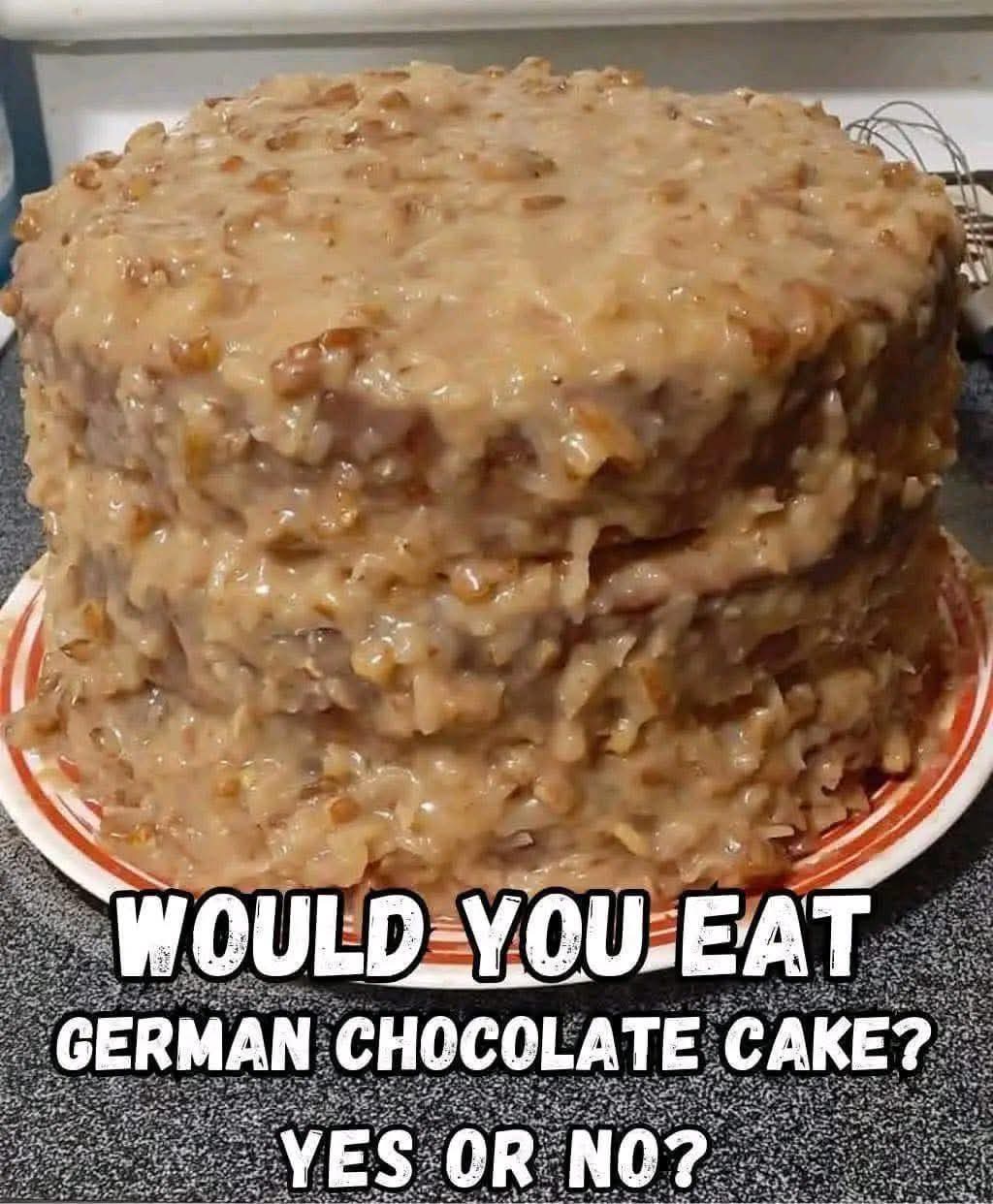
Our “Old School German Chocolate Cake” recipe isn’t just about baking; it’s about honoring tradition. We’re going back to the roots, embracing the time-tested techniques and high-quality ingredients that make this cake truly unforgettable. Forget dry, crumbly layers or skimpy frosting; this recipe delivers a cake that is supremely moist, with an intense chocolate flavor that isn’t overly sweet, providing the ideal canvas for the star of the show: that glorious coconut-pecan frosting. This frosting, cooked to perfection, is thick, rich, and loaded with generous amounts of toasted pecans and shredded coconut, creating a textural wonderland with every bite. The “old school” approach means taking the time to cook the frosting until it reaches that perfect, luscious consistency, ensuring it adheres beautifully to the cake layers and delivers an authentic flavor profile that modern shortcuts simply can’t replicate.
Baking this German Chocolate Cake is more than just following steps; it’s a labor of love that yields immense satisfaction. The aroma alone, as the cake bakes and the frosting simmers, will transport you to a place of pure culinary joy. Whether you’re a seasoned baker or looking for a show-stopping dessert to impress, this recipe will guide you through creating a masterpiece that looks as incredible as it tastes. It’s the kind of cake that draws gasps of delight when it’s brought to the table, and sighs of contentment with every forkful. Get ready to experience the timeless allure of a true classic, a dessert that proves some things are just better the old-fashioned way.
Nutritional Information
Per serving (approximate values):
Calories: 580
Protein: 7g
Carbohydrates: 75g
Fat: 30g
Fiber: 4g
Sodium: 350mg
Ingredients
For the Cake Layers:
2 cups (4 sticks) unsalted butter, softened
2 cups granulated sugar
4 large eggs, separated (yolks for cake, whites for frosting)
4 ounces German’s sweet chocolate, melted and cooled
2 cups all-purpose flour
1 teaspoon baking soda
1/2 teaspoon salt
1 cup buttermilk
1 teaspoon vanilla extract
For the Coconut-Pecan Frosting:
1 cup (2 sticks) unsalted butter
1 can (12 ounces) evaporated milk
4 large egg yolks
1 1/2 cups granulated sugar
1 teaspoon vanilla extract
1 1/2 cups shredded sweetened coconut
1 1/2 cups chopped pecans, lightly toasted
Instructions
For the Cake Layers:
Preheat your oven to 350°F (175°C). Grease and flour three 9-inch round cake pans. Line the bottoms with parchment paper if desired for easy removal.
In a large bowl, cream together the softened butter and granulated sugar until light and fluffy, about 3-5 minutes.
Beat in the 4 egg yolks, one at a time, ensuring each is fully incorporated before adding the next.
Stir in the melted and cooled German’s sweet chocolate until well combined.
In a separate medium bowl, whisk together the all-purpose flour, baking soda, and salt.
In another small bowl, combine the buttermilk and vanilla extract.
Gradually add the dry ingredients to the wet ingredients, alternating with the buttermilk mixture, beginning and ending with the dry ingredients. Mix on low speed until just combined, being careful not to overmix.
Pour the batter evenly into the three prepared cake pans.
Bake for 30-35 minutes, or until a wooden skewer inserted into the center of the cakes comes out clean.
Remove the cakes from the oven and let them cool in the pans for 10-15 minutes before inverting them onto wire racks to cool completely. Ensure cakes are completely cool before frosting.
For the Coconut-Pecan Frosting:
In a medium saucepan, melt the butter over medium heat.
Whisk in the evaporated milk, 4 egg yolks, and granulated sugar. Cook over medium heat, stirring constantly with a whisk, until the mixture thickens and reaches a custard-like consistency (it should coat the back of a spoon), about 12-15 minutes. Do not boil vigorously, but a gentle simmer is fine.
Remove the saucepan from the heat and stir in the vanilla extract, shredded coconut, and toasted chopped pecans.
Let the frosting cool completely at room temperature, stirring occasionally, until it is thick and spreadable. This can take 1-2 hours. Do not refrigerate to speed cooling, as it can make the frosting too stiff.
Assembly:
Once the cake layers are completely cool and the frosting has thickened, place one cake layer on your serving plate or cake stand.
Spread about one-third of the coconut-pecan frosting evenly over the top of the first layer.
Carefully place the second cake layer on top and spread another one-third of the frosting.
Top with the third cake layer and spread the remaining frosting over the top and down the sides of the cake, ensuring it’s evenly distributed.
For best results, let the cake sit at room temperature for at least 30 minutes for the flavors to meld before slicing and serving.
Cooking Tips and Variations
To ensure your Old School German Chocolate Cake is truly spectacular, attention to detail makes all the difference. Always start with room temperature ingredients for both the cake batter and the frosting (except for the melted chocolate). This helps everything emulsify properly, leading to a smoother batter and a creamier, more consistent frosting. When melting the German’s sweet chocolate, use a double boiler or microwave it in short bursts, stirring frequently, to prevent scorching. Overheated chocolate can seize and become unusable. For the cake layers, be mindful not to overmix the batter once the flour is added; overmixing develops gluten, which can result in a tough, dry cake. Mix until just combined. Preparing your cake pans properly – greasing, flouring, and lining with parchment paper – is crucial to prevent sticking and ensure your beautiful layers release easily.
The frosting is the heart of this cake, and patience is key when cooking it. Stirring constantly prevents the egg yolks from scrambling and the mixture from sticking to the bottom of the pan. Cook until it visibly thickens and coats the back of a spoon; it will continue to thicken as it cools. Toasting the pecans before adding them to the frosting significantly enhances their nutty flavor and aroma, adding another layer of depth to the cake. Spread them on a baking sheet and toast in a 350°F (175°C) oven for 5-7 minutes, watching carefully to prevent burning. Let them cool completely before chopping.
For variations, while the classic is perfect as is, you could experiment with a thin layer of chocolate ganache drizzled over the top before applying the coconut-pecan frosting for an extra chocolate punch. You could also serve individual slices with a dollop of freshly whipped cream or a scoop of vanilla bean ice cream. For a slightly different nutty profile, walnuts can be used in place of pecans, though pecans are traditional. If you prefer a less sweet frosting, you can slightly reduce the sugar amount, but be aware that it might affect the texture slightly. For presentation, consider garnishing the top with a few whole toasted pecans or a sprinkle of additional shredded coconut.
Storage and Reheating
Proper storage is essential to keep your Old School German Chocolate Cake fresh and delicious. Because the frosting contains dairy and eggs, it’s best to store the cake in an airtight container at room temperature for up to 2 days. If your kitchen is particularly warm, or if you plan to keep it longer, store it in the refrigerator. When refrigerated, the cake will stay fresh for up to 5-7 days. It’s important to cover it tightly with plastic wrap or place it in an airtight cake carrier to prevent it from drying out or absorbing refrigerator odors. Remove the cake from the refrigerator at least 30 minutes to an hour before serving to allow it to come closer to room temperature, which helps soften the cake layers and frosting, enhancing the flavors and texture.
Reheating is generally not recommended for a whole cake, as it can dry out the cake layers and alter the texture of the frosting. However, if you have individual slices that have been refrigerated, letting them sit at room temperature for 30-60 minutes is usually sufficient to bring them back to an enjoyable state. You can also very gently warm a slice in the microwave for 10-15 seconds if you prefer it slightly warm, but be extremely careful not to overheat it, as this can melt the frosting and make the cake rubbery. Freezing is an option for longer-term storage. To freeze, wrap individual slices or the entire cake (if unfrosted, wrap layers separately) tightly in plastic wrap, then an additional layer of aluminum foil. It can be frozen for up to 2-3 months. Thaw frozen cake in the refrigerator overnight, then bring to room temperature before serving. If freezing frosted slices, be aware that the frosting’s texture might change slightly upon thawing, becoming a bit softer.
Frequently Asked Questions
Why is it called German Chocolate Cake if it’s American?
The cake is named after Samuel German, an English-American baker who developed a dark baking chocolate bar for the Baker’s Chocolate Company in 1852. The chocolate was originally called “German’s Sweet Chocolate.” When the recipe for this cake became popular, it used “German’s Sweet Chocolate” as a key ingredient, and over time, the apostrophe and ‘s’ were dropped, leading to the name “German Chocolate Cake.” It has no direct connection to the country of Germany.
Can I make the cake layers or frosting ahead of time?
Yes, absolutely! You can bake the cake layers a day in advance. Once completely cooled, wrap each layer tightly in plastic wrap and store them at room temperature. The frosting can also be made a day ahead. Once it’s cooked and cooled, cover it tightly and store it in the refrigerator. Before assembling the cake, let the refrigerated frosting come to room temperature for several hours or gently warm it over low heat, stirring frequently, until it’s spreadable again. Do not overheat, as it can become too runny.
My frosting didn’t thicken. What went wrong?
The most common reason for runny frosting is not cooking it long enough or not cooking it over consistent medium heat. The mixture needs to reach a certain temperature and cook for an adequate amount of time for the egg yolks to fully activate as a thickener and for enough moisture to evaporate. Ensure you’re stirring constantly to prevent scorching, and continue cooking until it visibly coats the back of a spoon and has a custard-like consistency. It will thicken further as it cools, but it needs to achieve a proper initial thickness on the stove.
Can I use milk chocolate instead of German’s sweet chocolate?
While you technically can, it’s not recommended for an authentic “Old School German Chocolate Cake.” German’s Sweet Chocolate has a specific flavor profile—it’s sweeter than unsweetened or bittersweet chocolate but darker than milk chocolate. Using milk chocolate would result in a much sweeter cake with a less intense chocolate flavor, altering the traditional balance of the recipe. If German’s sweet chocolate is unavailable, a good quality bittersweet chocolate (around 60-70% cacao) with a tablespoon or two of extra sugar added to the cake batter could be a substitute, but the flavor won’t be exactly the same.