
Introduction
The year was 1965. Bell bottoms were on the horizon, The Beatles were dominating the airwaves, and in kitchens across America, a new wave of convenience foods was taking hold. It was in this era that my mother, ever the diligent homemaker, found a recipe tucked away in the pages of a glossy magazine. It promised a simple yet satisfying appetizer, perfect for any gathering. Little did she know, this humble clipping would become the cornerstone of every holiday celebration for decades to come, her culinary signature, and the undisputed first dish to vanish from the table.
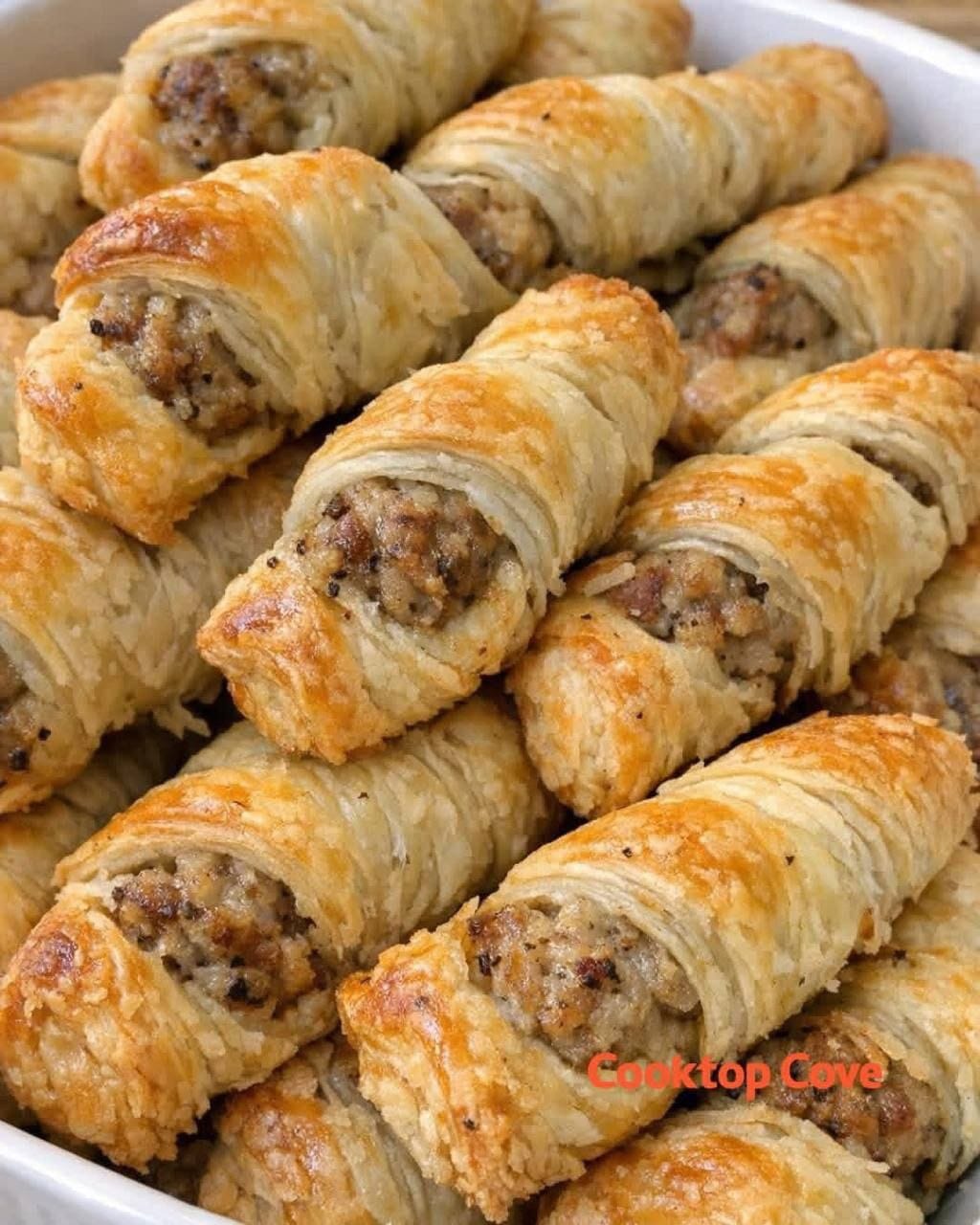
These aren’t just any sausage rolls; these are “Mom’s 1965 Holiday Sausage Rolls.” They embody everything wonderful about a classic, no-fuss holiday dish: savory, seasoned sausage encased in a golden, flaky, buttery pastry. They’re comforting, utterly irresistible, and deceptively easy to make. From Thanksgiving feasts to Christmas Eve potlucks, and even New Year’s Day brunches, these little bites of joy have always been the star. Their enduring popularity isn’t just about nostalgia; it’s about a perfect flavor and texture combination that appeals to every palate, from the pickiest child to the most discerning adult.
There’s a reason this recipe has stood the test of time and remained a family legend. It’s the kind of dish that brings people together, sparking conversations and creating cherished memories. Whether you’re looking for a reliable crowd-pleaser for your next gathering, a taste of comforting nostalgia, or simply an easy yet impressive appetizer, these vintage sausage rolls are your answer. Prepare to make them a new tradition in your own home, because once you try them, you’ll understand why they’re still the first thing to disappear.
Nutritional Information
Per serving (approximate values for one roll):
Calories: 185
Protein: 7g
Carbohydrates: 10g
Fat: 13g
Fiber: 0.5g
Sodium: 310mg
Ingredients
1 pound bulk pork sausage (mild or hot, depending on preference)
1/2 cup finely chopped yellow onion
1/4 cup finely chopped fresh parsley
1 teaspoon dried sage
1/2 teaspoon garlic powder
1/4 teaspoon black pepper
Pinch of red pepper flakes (optional, for a little kick)
2 sheets (17.3 ounces total) frozen puff pastry, thawed according to package directions
1 large egg, beaten (for egg wash)
1 tablespoon water (for egg wash)
All-purpose flour, for dusting work surface
Instructions
Prepare the Sausage Filling: In a large mixing bowl, combine the bulk pork sausage, finely chopped yellow onion, finely chopped fresh parsley, dried sage, garlic powder, black pepper, and optional red pepper flakes. Use your hands to thoroughly mix the ingredients until well combined, ensuring the seasonings are evenly distributed throughout the sausage.
Test the Seasoning (Optional but Recommended): For best results, pinch off a small amount of the seasoned sausage mixture (about a tablespoon). Cook it in a small skillet over medium heat until browned and cooked through. Taste it and adjust the seasoning in the main mixture as needed (e.g., add more salt, pepper, or herbs).
Prepare the Puff Pastry: Lightly dust a clean work surface with flour. Carefully unfold one sheet of thawed puff pastry. If it’s creased, you can gently roll it out with a rolling pin to smooth it out slightly and achieve a more even thickness, aiming for approximately a 10×12-inch rectangle. Repeat with the second sheet of puff pastry. Keep the pastry cold; if it becomes too warm and sticky, return it to the refrigerator for 10-15 minutes.
Form the Sausage Logs: Divide the seasoned sausage mixture into four equal portions. Take one portion and, using your hands, roll it into a log shape that is roughly the same length as the longer side of your puff pastry sheet (about 12 inches) and about 1 inch in diameter. Repeat with the remaining three portions of sausage.
Assemble the Rolls: Place one sausage log along one long edge of a puff pastry sheet. Gently roll the pastry over the sausage log, enclosing it completely. Press the seam firmly to seal. You should have two long pastry-wrapped sausage logs from each sheet of puff pastry. Repeat with the second puff pastry sheet and the remaining two sausage logs.
Cut the Rolls: Using a sharp knife or a serrated knife, cut each long pastry-wrapped sausage log into 1-inch thick individual rolls. You should get about 10-12 rolls from each log, totaling approximately 40-48 rolls.
Preheat Oven and Prepare Baking Sheets: Preheat your oven to 400°F (200°C). Line two large baking sheets with parchment paper for easy cleanup and to prevent sticking.
Arrange on Baking Sheets: Place the cut sausage rolls seam-side down on the prepared baking sheets, leaving about 1 inch of space between each roll to allow for even baking and puffing.
Apply Egg Wash: In a small bowl, whisk together the beaten egg and 1 tablespoon of water to create an egg wash. Lightly brush the tops and sides of each sausage roll with the egg wash. This will give them a beautiful golden sheen and help them brown evenly.
Bake: Bake for 20-25 minutes, or until the puff pastry is golden brown, puffed, and the sausage filling is cooked through (internal temperature of 160°F / 71°C). If baking in batches, ensure the oven returns to temperature between batches.
Cool and Serve: Remove the baking sheets from the oven. Let the sausage rolls cool on the baking sheets for a few minutes before transferring them to a wire rack. Serve warm or at room temperature.
Cooking Tips and Variations
Puff Pastry Prowess: The key to flaky puff pastry is keeping it cold. Work quickly, and if your pastry becomes too warm and sticky, pop it back in the fridge for 10-15 minutes. Don’t overwork the dough; gentle handling will result in the best texture. For extra crispiness, you can lightly score the top of the pastry with a sharp knife before applying the egg wash, creating small vents.
Sausage Savvy: While bulk pork sausage is traditional, feel free to experiment! Ground chicken or turkey sausage can be used for a lighter option. For a vegetarian twist, use a plant-based ground “meat” alternative, ensuring it’s well-seasoned. If using plain ground pork, beef, or a blend, you’ll need to add salt (1/2 to 1 teaspoon) and potentially more of the other spices to taste.
Flavor Boosters: Don’t be afraid to customize the seasoning. A pinch of dried thyme or rosemary can be lovely. A tablespoon of grated Parmesan cheese mixed into the sausage adds a salty, umami depth. For a touch of sweetness and tang, a teaspoon of Dijon mustard or a tablespoon of apple butter mixed into the sausage can be surprisingly delicious. Finely diced bell peppers or shredded carrots could also be incorporated for added color and nutrients.
Make-Ahead Magic: These sausage rolls are fantastic for preparing in advance. You can assemble them completely, arrange them on parchment-lined baking sheets, and then cover tightly with plastic wrap and refrigerate for up to 24 hours before baking. For longer storage, freeze the unbaked rolls on the baking sheets until solid, then transfer them to a freezer-safe bag or container for up to 1 month. Bake from frozen, adding an extra 5-10 minutes to the baking time, or until golden and cooked through.
Serving Suggestions: While perfect on their own, these sausage rolls are delightful with a dipping sauce. Classic options include spicy brown mustard, honey mustard, a sweet and tangy chutney (like mango or apple), or even a simple ketchup. They pair wonderfully with other holiday appetizers like a cheese board, vegetable crudités, or a festive dip.
Achieving the Golden Glow: The egg wash is crucial for that beautiful golden-brown, glossy finish. Ensure you brush the tops and sides evenly. For an extra touch, you can sprinkle a few sesame seeds or poppy seeds on top of the egg-washed rolls before baking.
Don’t Overcrowd: Give your sausage rolls space on the baking sheet. Overcrowding can lead to steaming rather than baking, resulting in a less crispy crust. Bake in batches if necessary.
Storage and Reheating
Storage: Leftover sausage rolls can be stored in an airtight container in the refrigerator for up to 3-4 days. For longer storage, they can be frozen after baking. Once completely cooled, arrange them in a single layer on a baking sheet and freeze until solid. Transfer to a freezer-safe bag or container and store for up to 2-3 months. Thaw in the refrigerator overnight before reheating.
Reheating: For best results, reheat baked sausage rolls in a preheated oven or toaster oven at 300-325°F (150-160°C) for 10-15 minutes, or until heated through and the pastry is crisp again. Reheating in a microwave is possible, but the pastry will lose its crispness and may become soft. If using a microwave, heat in 30-second intervals until warmed through.
Frequently Asked Questions
Can I make these with homemade puff pastry?
Absolutely! If you’re an experienced baker and have a favorite homemade puff pastry recipe, it will undoubtedly elevate these sausage rolls to an even higher level of deliciousness. Just ensure your homemade pastry is rolled to a similar thickness as store-bought sheets for consistent results.
What if I can’t find bulk sausage?
No problem! You can buy regular pork sausage links (like breakfast sausage) and remove the casings. Alternatively, you can use plain ground pork and season it yourself. For plain ground pork, start by adding 1 teaspoon salt, 1/2 teaspoon black pepper, 1 teaspoon dried sage, 1/2 teaspoon garlic powder, and 1/4 cup finely chopped parsley. Taste and adjust after cooking a small sample.
Can these be made gluten-free?
Yes, they can! Many brands now offer gluten-free puff pastry in the freezer section of grocery stores. Ensure your bulk sausage is also gluten-free (check ingredients). Follow the recipe instructions as written, adjusting baking times slightly if directed by the gluten-free puff pastry package.
How do I prevent the pastry from getting soggy on the bottom?
To help prevent a soggy bottom, ensure your oven is fully preheated to the correct temperature. Also, make sure not to overcrowd the baking sheet, as this can trap steam. Using parchment paper helps, and you can also place the baking sheet on the lowest rack of the oven for the last 5-10 minutes of baking to encourage browning on the bottom, if needed.